The Last Asset: Summary and Key Ideas from Hélder Teixeira's Book
Direct answer
The Last Asset, by Hélder Teixeira, argues that an organisation's human maturity, not its technology, is the asset that decides who survives the acceleration of artificial intelligence. The book moves through the pretence of modern leadership, collective burnout, organisational shadow, and the concept of Deep Capital, before proposing a three-dimensional architecture for leadership.
Every year, billions get invested in leadership training. And every year, leaders end up more lost, not less. The Last Asset starts from this uncomfortable contradiction and proposes a shift in the question itself, in what we mean by leading, rather than another competency model.
What is the book The Last Asset about?
It is about the thesis that an organisation's human maturity, its collective capacity for consciousness, adaptation and meaning-making, has stopped being a human resources topic and become a financial variable. At a time when artificial intelligence executes more and more tasks once reserved for humans, the book argues that what remains, the last asset no machine can replicate, is precisely that human depth cultivated with intention.
Who wrote The Last Asset?
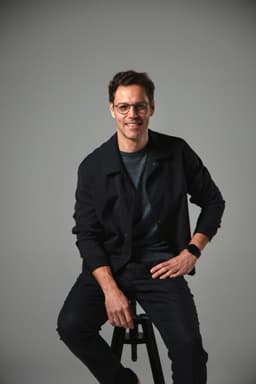
Hélder Teixeira is the founder of the Deep Capital ecosystem and the creator of Evomatrix, an instrument that reads decision behaviour under pressure. His career spans more than two decades across different organisational settings, from the family business to strategic consulting, from higher education to fieldwork with large-scale institutional clients. The book grows out of pure theory and out of two personal burnouts the author describes with a level of honesty rare in this kind of management literature.
Is the book about artificial intelligence, or about something else?
It is about both, linked by a single argument. AI is the trigger that makes an older question urgent: what makes a human irreplaceable, once a machine already executes technical tasks faster and with fewer errors? The book answers by citing the concept of the Digital Ouroboros, the idea that an organisation that rolls out AI without having examined its own internal maturity ends up amplifying its own errors on an industrial scale, rather than automating efficiency.
How would you sum up the book's eight chapters?
The opening chapters take apart the pretence of contemporary leadership, the industry of standardised programmes that produces compliance instead of awareness, and name the collective burnout that pretence leaves behind. The chapters that follow descend into the invisible territory of organisations, the complexes and organisational shadow described through Jungian psychology, and into a direct confrontation with the accelerationism of philosopher Nick Land, who argues that nothing human survives technological acceleration. The second half of the book builds the answer: Deep Capital as an economic category, Deep Leadership 3D as a three-dimensional leadership architecture, the Self, the We and the Field, and a final synthesis that returns to the reader the question the book opens with.
What is the central thesis running through the book?
The central thesis answers Nick Land directly: the premise of accelerationism is right, technology dissolves everything superficial, but the conclusion is wrong, because there is a human acceleration cannot dissolve, the human who has done the work of integrating their own shadow. That human, and only that human, is what the book calls the last asset.
Who is this book for, and who is it not for?
It serves managers, founders, and team leaders who already sense, even without a name for it, that the leadership model they learned has stopped being enough. It is not a book of quick fixes, and it promises no productivity formulas. Anyone looking for a task-management manual will find, instead, a proposal for inner work that demands time and a willingness to look inward.
What personal history runs through the book?
The book does not separate theory from biography. Hélder Teixeira grew up inside a family business from the age of twelve, joined his father's business full time at eighteen, and went through two burnouts over the course of his career before seeking, for the first time, serious depth psychology work. These episodes serve as living proof of the book's own argument, rather than standing as an isolated emotional confession: that a defence mechanism built in childhood, once integrated, becomes capability, and that this same transformation, carried out at organisational scale, is what Deep Capital tries to describe.
What place does this book hold in the Portuguese leadership market?
It is one of the few leadership books written originally in European Portuguese that combines depth psychology, a critique of technological accelerationism, and its own diagnostic instrument, rather than importing an American model with cosmetic adaptations. The book itself names this problem: leadership programmes designed inside one culture and sold globally with no real adaptation. The Last Asset positions itself as an alternative to that import model, built from cases and from a language that recognises the Portuguese and European context, not simply translated from somewhere else.
Where can you read the book, and how does it relate to the leadership archetypes?
The book is available at /en/book, where Hélder Teixeira also details the launch sessions and associated programmes. The eight leadership archetypes described in the book, and the architecture of Deep Leadership 3D, work as practical entry points for anyone who wants to start applying the ideas before even finishing the full book. The question that opens the book, and closes it, sums up everything else: 'When everything is done by machines, will there still be humans who want to work with you?' It is a simple question to read and a hard one to answer without hesitating, which is exactly why the book exists.
Frequently asked questions
- Do you need to read the book in order to understand it?
- It helps, because the argument builds progressively, chapter by chapter. Reading individual chapters on their own is possible, but the force of the final confrontation with accelerationism depends on what was built before it.
- Does the book explain Evomatrix in full technical detail?
- The book presents the eight archetypes and the logic behind the diagnostic, but keeps the internal scoring methodology confidential, the way any serious diagnostic instrument protects its own intellectual property.
- Does the book have practical application, or is it only theory?
- It has both. The foundation is conceptual, but every chapter connects to an applicable instrument, Evomatrix, Deep Leadership 3D, built for real use inside management teams, not just for reading.